

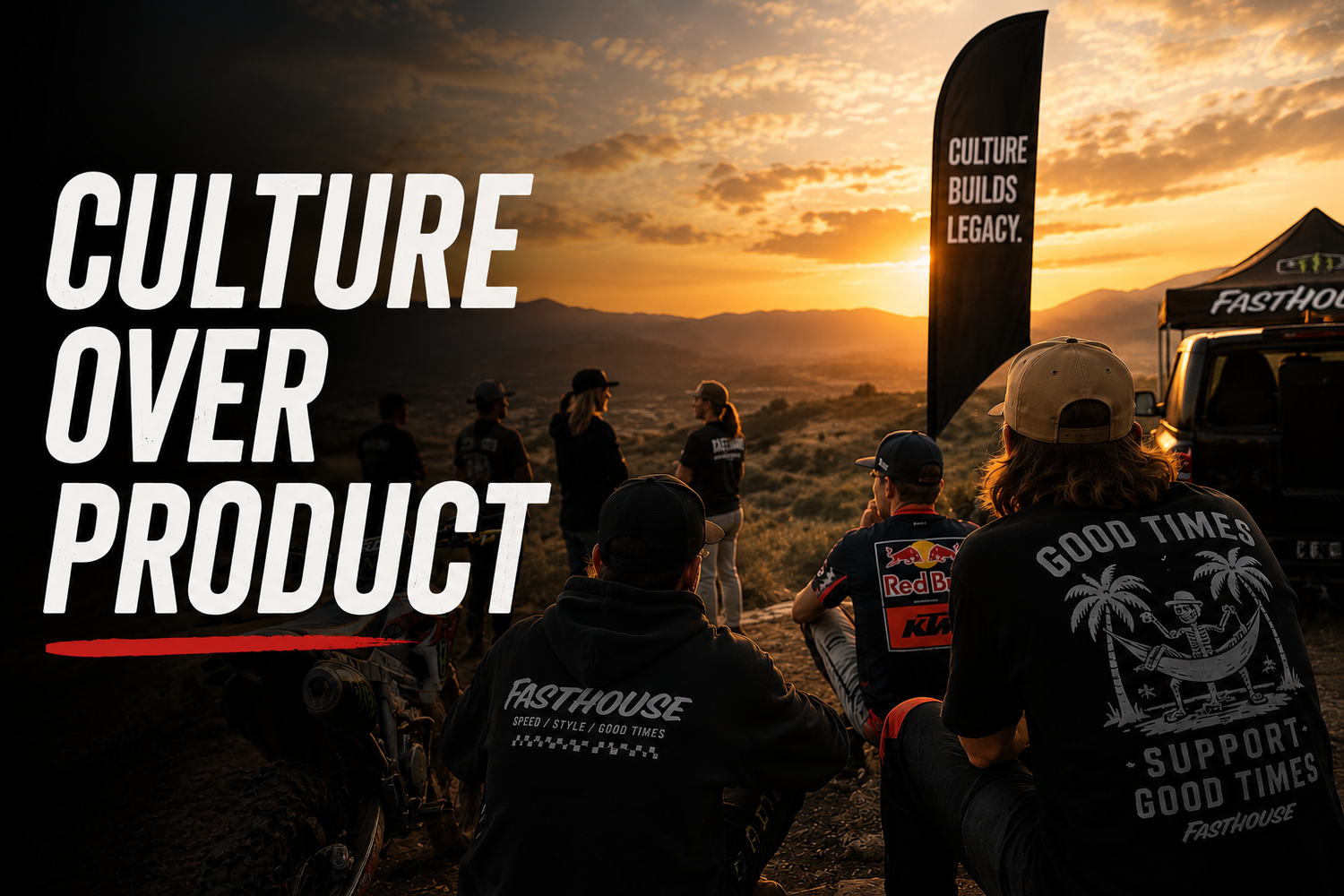
Culture Comes First. The Product Comes Second.
For decades, action sports companies followed a familiar formula. Build a better product. Find athletes to use it. Buy advertising. Tell customers why the newest version is lighter, faster, stronger, or more advanced than the last. That formula worked, and in many ways it still does. Products matter. Quality matters. Performance matters. A company that ignores those things will eventually be exposed.
The difference today is that a great product is no longer enough to build a great brand.
Nearly any capable company can source manufacturing, create professional packaging, launch a polished website, and produce beautiful marketing. Artificial intelligence has only accelerated that reality, making it easier than ever to look established from day one. What cannot be manufactured nearly as easily is culture. Culture has to be earned, and that has become one of the greatest competitive advantages a company can have.
The Old School Brands Already Knew This
The strongest brands understood this long before social media existed. Harley Davidson did not build a global following simply because it made motorcycles. It built riding clubs, rallies, traditions, dealerships that became gathering places, and a lifestyle people wanted to belong to. Patagonia became far more than an apparel company because it connected its products to environmental stewardship and the outdoor communities it served. Red Bull transformed an energy drink into a global media company by investing in athletes, films, events, and storytelling instead of relying solely on traditional advertising.
These companies did not accidentally create culture. They participated in it for years before asking people to buy from them. Customers may have discovered the product first, but they stayed because of what those brands represented.

Culture Is Not a Marketing Campaign
That is where many businesses might get stuck.
Culture cannot be built by redesigning a logo, hiring influencers, or adding the word "community" to a website. It is created through repeated actions that people remember. It is supporting an event when there is no immediate return. It is believing in an athlete before anyone else knows their name. It is making the local bike shop, race promoter, photographer, mechanic, coach, parent, and volunteer feel like they matter.
Culture is not what a company says about itself. It is what people say about that company when nobody from the company is in the room. That reputation is built through consistency, not campaigns.
Products Open the Door. Culture Invites People In.
A great product earns someone's attention. It creates the first purchase. But products are eventually copied. Features become standard. Competitors improve. The newest technology eventually becomes expected.
Culture creates something much harder to replace.
It connects the product to an identity, a memory, and a community. A competitor can reproduce the shape of a helmet or the cut of a jersey. It cannot reproduce ten years of showing up for the same people, telling the same stories, and investing in the same communities. Those things create emotional value that cannot be copied by lowering a price or releasing another product.
Action Sports Have Never Been Separate Worlds
For years, businesses treated cycling, motocross, hockey, BMX, skateboarding, mountain biking, and other action sports as completely separate industries. That may make sense inside a boardroom, but it no longer reflects how people actually live.
Today's athletes train together. They support one another online. They appear in each other's videos, podcasts, and social feeds. A cyclist may have raced motocross as a kid. A hockey player may spend summers riding mountain bikes. A BMX rider may follow Supercross every weekend. The audience has already crossed over.
The brands growing with those audiences recognize that shared passion. They understand that people are connected by lifestyle and identity, not simply by the equipment they use.

Authenticity Is Becoming More Valuable
Artificial intelligence is changing how businesses create content. Small companies now have access to creative tools that once required large marketing departments. That is exciting, but it also creates a new challenge.
When everyone can create polished content, polish becomes ordinary. Authenticity becomes valuable. Experience becomes valuable. A genuine point of view becomes valuable.
People who have spent years racing, riding, designing, traveling, competing, winning, losing, and building relationships inside these sports possess something AI cannot create overnight. They understand the stories behind the products. They understand why the culture exists in the first place.
That old school knowledge becomes a modern advantage when it is shared instead of hidden.
The Metrics Are Not Wrong. They Are Just Incomplete.
Sales matter. Profit matters. Margins matter. A healthy business depends on those numbers.
But financial reports only tell you what happened. They rarely explain why people cared enough to make it happen.
Companies should also pay attention to customer stories, repeat participation, community growth, referrals, collaborations, athlete relationships, and whether people continue engaging when nothing is being sold. Those are the indicators that a company is becoming part of the culture rather than simply selling into it.
The strongest brands understand that products generate transactions. Culture creates relationships. Relationships create longevity.
The Birdworx Take
Everything you have read above explains why Birdworx exists the way it does.
We are not trying to become another company that sells helmet graphics. We are trying to become a company that contributes to the culture surrounding the sports we love. Because products are only part of the story.
A helmet graphic will not change someone's life, but it might start a conversation that otherwise never happens. It may become the helmet someone wears while winning their first race, finishing their first century ride, making a national team, or simply riding with friends every Saturday morning. Years later, they probably will not remember the vinyl itself. They will remember the people they shared those moments with.
If you are a business owner, brand leader, or CEO wondering why growth feels harder than it used to, maybe it is time to ask a different question. Are you building products, or are you building something people want to belong to?
For years, companies believed they had to stay in one lane. Cycling companies stayed in cycling. Motocross companies stayed in motocross. Hockey companies stayed in hockey. We believe that thinking belongs to a different era.
Today's culture does not work that way. Athletes train together. They support each other. They appear in each other's content. They follow each other on social media. They inspire one another across every discipline. Action sports have become less about categories and more about a shared lifestyle.
The brands finding success today understand that. They are not defined by a single product. They are united by a culture that people want to be part of.
Maybe the biggest thing holding a company back is not the market. Maybe it is the mindset of the people leading it.
If you are still measuring success only by product sales, market share, or quarterly numbers, you may be watching only part of the picture. Those numbers matter, but they tell you what happened yesterday. Culture, community, relationships, and trust are much harder to measure, but they are often the reason people choose one brand over another in the first place.
At Birdworx, we do not believe the future belongs to companies that stay confined to one category. We believe the future belongs to brands that create a culture strong enough to connect people across cycling, motorsports, hockey, or most any other action sport. The products may change, but the passion, the people, and the stories are what bring those communities together.
Our goal has never been to become the biggest helmet graphics company. Our goal is to help build the culture around the sports we love. If we can contribute to that culture, support the people inside it, and tell stories worth sharing, then the products become something much more meaningful. They become reminders of experiences, symbols of friendships, and part of someone's story.
That is the company we want Birdworx to become.
Make It Your Own.
